


How to Remove Hazardous Trees Safely
- rami beiruty
- 4 days ago
- 6 min read

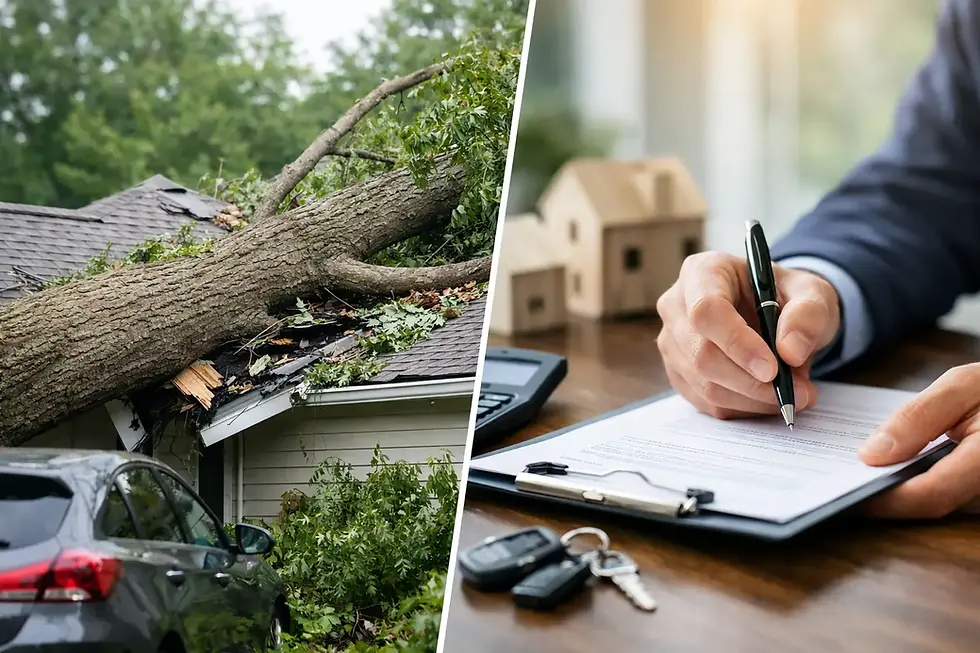
A tree leaning over a roof after heavy rain is not a job to put off until next weekend. When large limbs are cracked, roots are lifting, or a gum tree is dropping weight near a fence, pool, or powerline, the question becomes how to remove hazardous trees without turning a risk into a bigger and more expensive problem.
For most homeowners, the real issue is not just getting the tree down. It is getting it removed safely, cleanly, and without damage to the house, driveway, neighbouring property, or services below and above ground. That is where qualified arborists and proper rigging matter.
What makes a tree hazardous?
A hazardous tree is any tree that poses a genuine risk to people or property. Sometimes the signs are obvious, such as a split trunk after a storm or a large branch hanging over a roof. Other times, the danger is less visible. A tree can look healthy from the street while the root plate is failing, the trunk is hollow, or the canopy is overloaded and unstable.
On the Gold Coast, common residential risk scenarios include storm-damaged gums, tall palms shedding heavy fronds near outdoor areas, trees growing too close to homes, and removals in tight-access backyards where there is no safe room for the tree to fall in one piece. Trees near fences, sheds, pools, retaining walls, and powerlines need a far more controlled approach than basic cutting.
Hazard does not always mean the whole tree must come out. In some cases, selective pruning or reduction may lower the risk. In others, especially where there is structural failure, disease, or major instability, full removal is the safer option.
How to remove hazardous trees the right way
If you are looking up how to remove hazardous trees, the short answer is this: the safe method depends on the tree, the access, the surrounding structures, and the level of failure already present.
A qualified arborist starts with an on-site assessment. That means checking the lean, trunk condition, branch loading, root stability, access points, nearby assets, and any external risks such as traffic, neighbouring property, or overhead lines. A tree beside an open yard is one job. A large gum wedged between a house and a pool is another entirely.
From there, the removal method is planned. Hazardous trees are often dismantled in sections rather than felled whole. This is where rigging becomes critical. Branches and trunk sections are climbed, cut, supported, and lowered in a controlled way so they land where intended. On difficult sites, aerial inspections, climbing gear, ropes, pulleys, lowering devices, and experienced ground crew all work together to manage weight and movement safely.
That controlled process is what protects roofs, windows, garden structures, fences, and neighbouring lots. It also reduces the risk to anyone on site. With unstable trees, the wrong cut at the wrong time can shift loads fast. Experience matters because every section removed changes the balance of the tree.
Why hazardous tree removal is rarely straightforward
People often assume a tree removal is just a cutting job. Hazardous removals are different. Once decay, storm damage, awkward lean, or restricted access enters the picture, the job becomes a risk-management exercise.
For example, a storm-damaged tree may have fibres still holding a split limb in place. It looks static until pressure is released. A palm near a pool may seem simple, but limited access can mean every section needs to be carried or lowered out cleanly. A gum tree overhanging a house may require staged dismantling from the top down, with each piece rigged away from the roofline.
That is why insured, qualified operators are the safer choice. You are not paying for someone to turn up with a chainsaw. You are paying for judgement, specialised equipment, and a method that suits the site.
When removal is urgent
Some trees can wait a few days for quoting and planning. Others need prompt attention. If a tree has shifted after a storm, has visible cracking, is leaning suddenly, or has dropped major limbs near access areas, it is worth treating the situation as urgent.
The same applies if branches are over powerlines or if the tree is blocking access to your home, driveway, or shared property areas. In these cases, fast response matters, but so does proper assessment. Rushing in without a plan can make the site less safe.
For homeowners, the practical first step is to keep clear of the area and arrange a professional inspection. A same-day quote and site visit can make a big difference when you are trying to work out whether the tree is immediately dangerous or simply overdue for removal.
Trees near houses, pools, fences, and powerlines
The closer a hazardous tree is to something valuable, the more important controlled removal becomes. Trees beside homes can damage gutters, roofs, eaves, and windows even with relatively small movement. Near pools, there is the added risk of damaging paving, pool fencing, filtration equipment, and surrounding structures. Fences and retaining walls are also common casualties when heavy limbs are dropped without proper control.
Powerlines raise the level of risk again. Trees near electrical infrastructure require extra caution, planning, and the right procedures. In these cases, no homeowner wants guesswork. The job needs to be approached with the right clearances, equipment, and experience.
This is also where tight-access capability becomes valuable. Many suburban blocks in places like Robina, Burleigh Heads, Benowa, and Southport do not offer wide side access or easy machinery entry. A good arborist team can still remove the tree safely by climbing and rigging sections out piece by piece.
What to expect from a professional hazardous tree removal service
A proper service should feel clear from the start. You should get an honest assessment of the risk, a straightforward quote, and a plan that matches the job. If the tree can be made safe without full removal, that should be explained. If removal is the only sensible option, the reasons should be clear.
You should also expect proof of insurance, qualified operators, and a team that understands difficult removals. For hazardous jobs, especially near structures, experience is not a bonus. It is part of the safety system.
Pricing will vary depending on height, species, access, rigging complexity, waste volume, and whether stump grinding is included. A tall gum over a house will cost more than an open-area removal because the risk, labour, and time are higher. The cheapest quote is not always the best value if it leaves you exposed to damage, delays, or poor site clean-up.
At the same time, a professional quote should be transparent. Homeowners want to know what is included, how long the work is likely to take, and whether council approvals may apply in some situations. Straight answers matter.
How to choose the right team
When comparing providers, look for the basics first: qualifications, insurance, local experience, and a clear understanding of rigging and controlled dismantling. Then look at how they communicate. Are they assessing the actual risks on your property, or are they giving a generic price with very little detail?
Hazardous tree work is one of those services where local knowledge helps. A team used to Gold Coast conditions will understand the impact of coastal weather, storm events, fast-growing species, and the practical access issues common across residential blocks. They will also know how to handle the sort of jobs many homeowners worry about most - overgrown gums, heavy palms, awkward backyard removals, and trees close to homes.
Tree Rigging focuses on exactly that kind of work, with qualified arborists, full insurance, and the rigging experience needed for difficult removals where safety comes first.
The main thing homeowners get wrong
The biggest mistake is waiting until the tree fails further. Hazard signs rarely improve on their own. A leaning trunk, cracked union, lifting roots, or repeated limb drop is often the warning stage before real property damage happens.
The second mistake is treating hazardous tree removal like a basic yard job. The more confined the site and the larger the tree, the more planning and skill are required. What looks like a single tree can involve roof protection, controlled lowering, traffic management, neighbour considerations, and careful clean-up.
If you are unsure whether a tree is dangerous enough to remove, that is usually the point to get it assessed. A quick, professional site inspection gives you a clearer answer than guessing from the ground.
A hazardous tree does not need to be on the verge of collapse to justify action. If it is threatening your home, outdoor areas, or peace of mind, getting the right advice early is often the safest and most cost-effective move.


Comments