


Residential Tree Removal Guide for Homeowners
- rami beiruty
- 2 days ago
- 6 min read

A tree can go from feature to liability quicker than most homeowners expect. One big storm, a heavy lean over the roof, roots pushing near a pool, or dead limbs hanging above the fence line can turn a normal yard into a genuine safety issue. This residential tree removal guide is built for property owners who want a clear idea of when removal makes sense, what the job involves, and how to choose the right team to handle it safely.
When tree removal is the right call
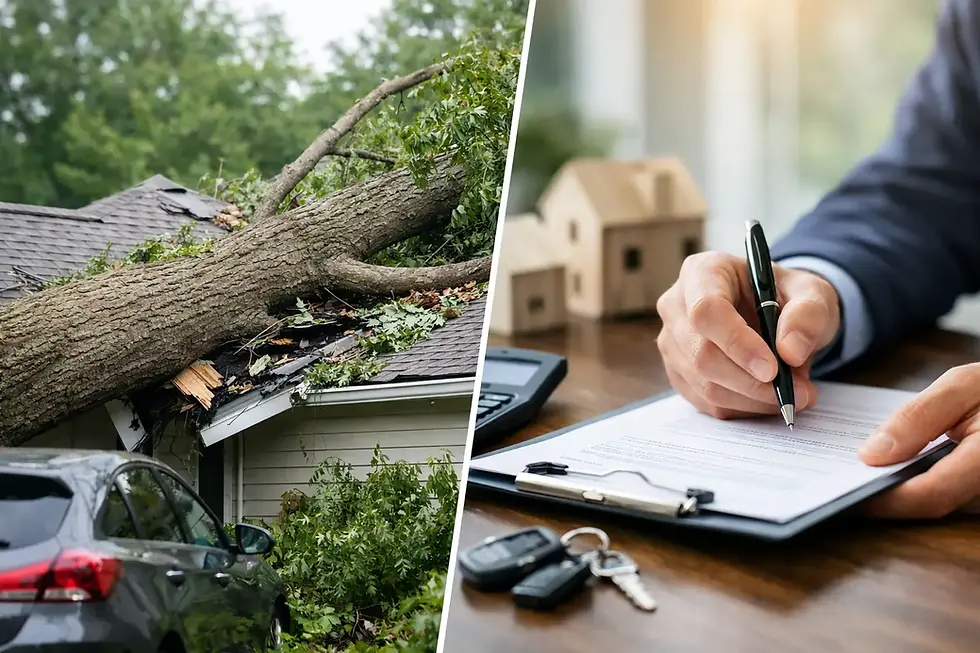
Not every problem tree needs to come out, but some situations leave little room for delay. If a tree is dead, structurally unstable, storm-damaged, or growing too close to a home, shed, fence, driveway or powerlines, removal is often the safest option. The same applies when large limbs are dropping, the trunk is splitting, or the canopy has become too heavy for the tree to support properly.
On residential properties across the Gold Coast, a few scenarios come up again and again. Overgrown gum trees can outsize the block and start overhanging roofs or neighbouring yards. Palms can become messy, unstable, or difficult to manage once they are too tall and close to structures. Storm damage can leave a tree partly failed, with hidden weakness that is not obvious from the ground. In tight suburban spaces, even a healthy tree may need removal if access, property upgrades, or safety concerns leave no workable alternative.
What matters most is risk. A tree near a house is very different from the same tree in an open paddock. On residential blocks, there is less room for error, which is why removal needs to be planned properly from the start.
What a residential tree removal guide should tell you first
The first thing any residential tree removal guide should make clear is this: residential removal is rarely just a cutting job. It is a controlled dismantling process. That is especially true when a tree sits near homes, pools, retaining walls, garages, solar panels or shared boundaries.
A qualified arborist will assess the tree’s condition, its lean, weight distribution, surrounding assets, and site access before any work starts. If there is limited space, the tree may need to be removed in sections using ropes, rigging systems and controlled lowering methods. That approach helps protect roofs, gardens, fences and paving while keeping workers and occupants safe.
This is where experience matters. A straightforward front-yard removal is one thing. A large gum in a back yard with poor access, overhead hazards and little drop zone is another. The gear, planning and skill level needed are not the same.
Common residential tree removal situations on the Gold Coast
Local conditions shape the kind of tree work homeowners need. Strong winds, fast-growing species and compact suburban lots create a mix of challenges that often need specialist handling.
Storm-damaged trees are one of the most urgent callouts. After heavy weather, branches may be hanging, trunks may be cracked, and root plates can shift without fully toppling. These jobs need prompt assessment because what looks stable can fail later.
Large gum trees are another common issue. They can become a serious concern when they start crowding homes, dropping limbs, or extending over neighbouring properties. Their size alone makes them a higher-risk removal, especially when sections need to be rigged down carefully.
Palm removals are also common across coastal suburbs. Palms can be awkward to access, heavy through the crown, and messy to dismantle. If they are growing beside pools, pergolas or fences, removal needs to be precise.
Then there are tight-access removals. Many residential jobs involve narrow side paths, rear yards with no machine access, or trees boxed in by structures. In those cases, the crew may need to climb, rig, cut and remove material by hand rather than relying on simple felling methods.
What affects the cost of tree removal
Homeowners usually want a straight answer on price, but tree removal costs depend on the site, not just the tree. Height and trunk size matter, but they are only part of the picture.
Access is one of the biggest factors. A tree in an open front yard is quicker and easier to remove than one behind a house with limited entry. The closer the tree is to buildings, powerlines, pools or boundary fences, the more care and labour the job requires. Tree condition also matters. A dead or storm-damaged tree can be more dangerous to climb and dismantle than a stable healthy one.
Waste volume, stump grinding, traffic control, and permit requirements can also affect the final cost. So can urgency. Emergency storm work often needs immediate response and added safety measures.
That is why same-day quotes and on-site inspections are valuable. A proper quote should reflect the actual risk, access and scope of work, not guesswork over the phone.
How to choose the right arborist
If a contractor is removing a tree beside your home, qualifications and insurance are not optional. Residential work leaves no margin for shortcuts.
Look for an arborist or specialist tree team with proven experience in removals, not just general yard work. Full insurance is essential. So is a clear explanation of how the job will be done, what equipment will be used, and whether debris removal and stump grinding are included.
It also helps to ask about difficult jobs they regularly handle. Trees over roofs, removals in confined spaces, palms beside pools, and large eucalypts near homes all require proper rigging capability. A team that is used to this kind of work will usually speak plainly about risks, site protection and the safest way forward.
Transparent pricing matters too. A cheaper quote can end up expensive if it excludes cleanup, delays the job, or comes from an operator who is not properly insured. For most homeowners, peace of mind is worth far more than shaving a little off the price.
What to expect on the day of removal
A professional residential removal should feel organised from the moment the crew arrives. The site is assessed again, hazards are confirmed, and the work zone is set up to protect people and property. Vehicles, tools and rigging gear are positioned with access and efficiency in mind.
From there, the method depends on the tree and the site. In open space, sections may be brought down more directly. In tighter areas, limbs and trunk sections are lowered in a controlled way. The goal is not just to get the tree down, but to do it without damage to the home, surrounding structures or neighbouring property.
Good crews also keep disruption manageable. That means clear communication, tidy work practices and proper cleanup. If stump grinding is part of the job, that can usually be arranged at the same time or immediately after, depending on access and site conditions.
Permits, neighbours and practical planning
Some removals may need council approval depending on the tree, its size, location or protection status. This is one of those areas where it depends on the property and the species involved. A local operator who works across Gold Coast suburbs regularly can usually flag early if approvals may be required.
Neighbour considerations also matter. If a canopy extends over the boundary or access needs to come through a shared side area, it is worth sorting that out before work starts. The smoother the planning, the smoother the removal.
Timing can make a difference as well. If a tree is already showing signs of failure, waiting for the next storm is rarely a smart gamble. Early action is almost always safer and often more affordable than emergency removal after damage has happened.
Why specialised rigging matters in residential removals
For homeowners, the difference between basic cutting and proper rigging is simple. One protects your property. The other hopes for the best.
Rigging allows large sections to be cut, supported and lowered under control rather than dropped. On residential sites, that matters when there is a roof underneath, glass nearby, a pool fence beside the trunk, or limited room to work. It is one of the clearest signs you are dealing with a serious tree contractor rather than a general operator.
For difficult removals, that capability can be the difference between a clean job and a very costly mistake. It is also why many local homeowners choose experienced teams such as Tree Rigging when the tree is large, awkward, storm-damaged or close to something that cannot be replaced easily.
If you are looking at a tree and wondering whether it can wait, that hesitation is usually the sign to get it assessed. A fast, qualified opinion gives you options. Waiting until a branch comes down on the roof usually takes those options away.


Comments